Objectives:
- Explain convolutional layers in a deep network, along with their hyperparameters.
- Explain pooling layers.
- Design and implement deep convolutional neural networks.
Tutorial
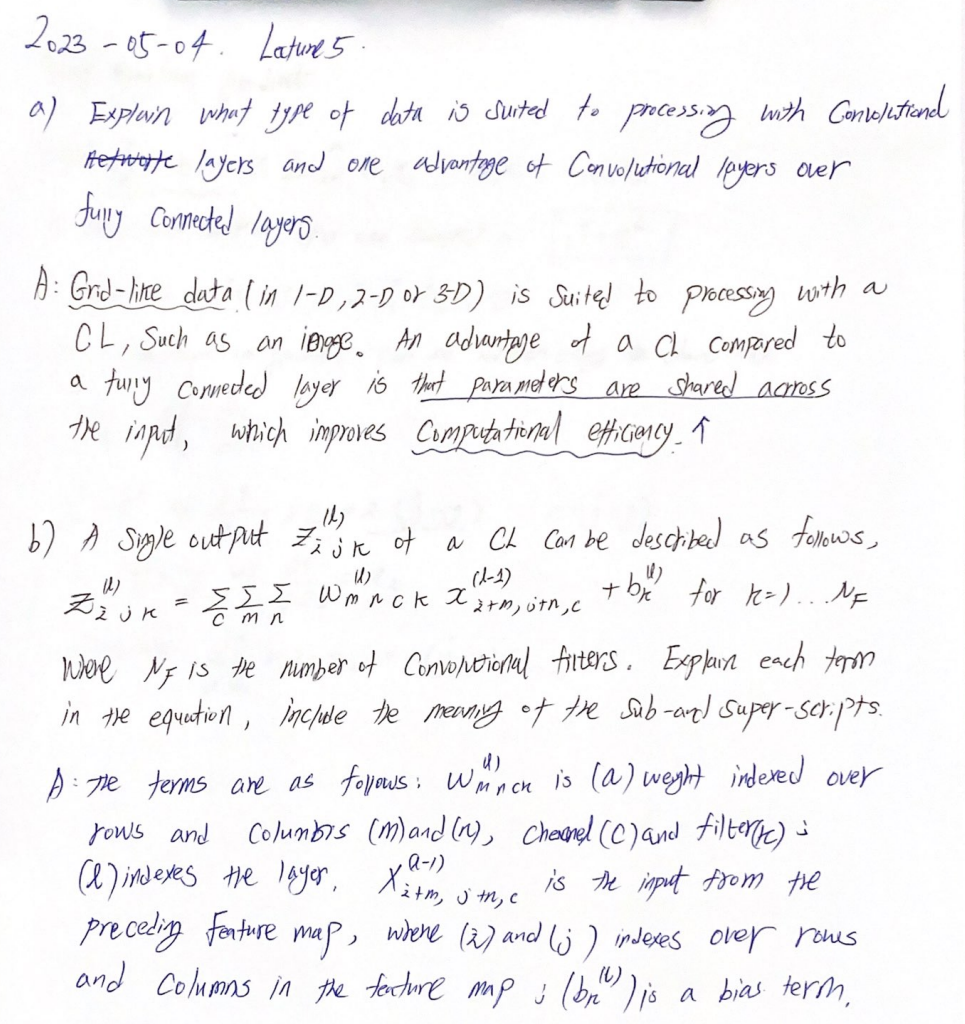
- Convolutional layer
PART1: Convolutional layers and Pooling layers

- CNN은 Grid type data에 유용하다! 그래서 이미지에 특화됨 (tutorial)
- 한가지 명심할것은 그전에배운 fully connected layer 와 cnn은 다른것이다.

- Tutorial에 나왔던 CN의 수학적 모델 숙지. i: index row in feature map, j: index column in feature map, m: index column in 2D filter, n: index row in 2D filter, b: bias
- filter라 함은 여러 종류가 있는데 이미지에서 특정 패턴을(edges 등)을 찾기위해 사용한다. 특징점을 찾기위해서라고도 할 수 있다.
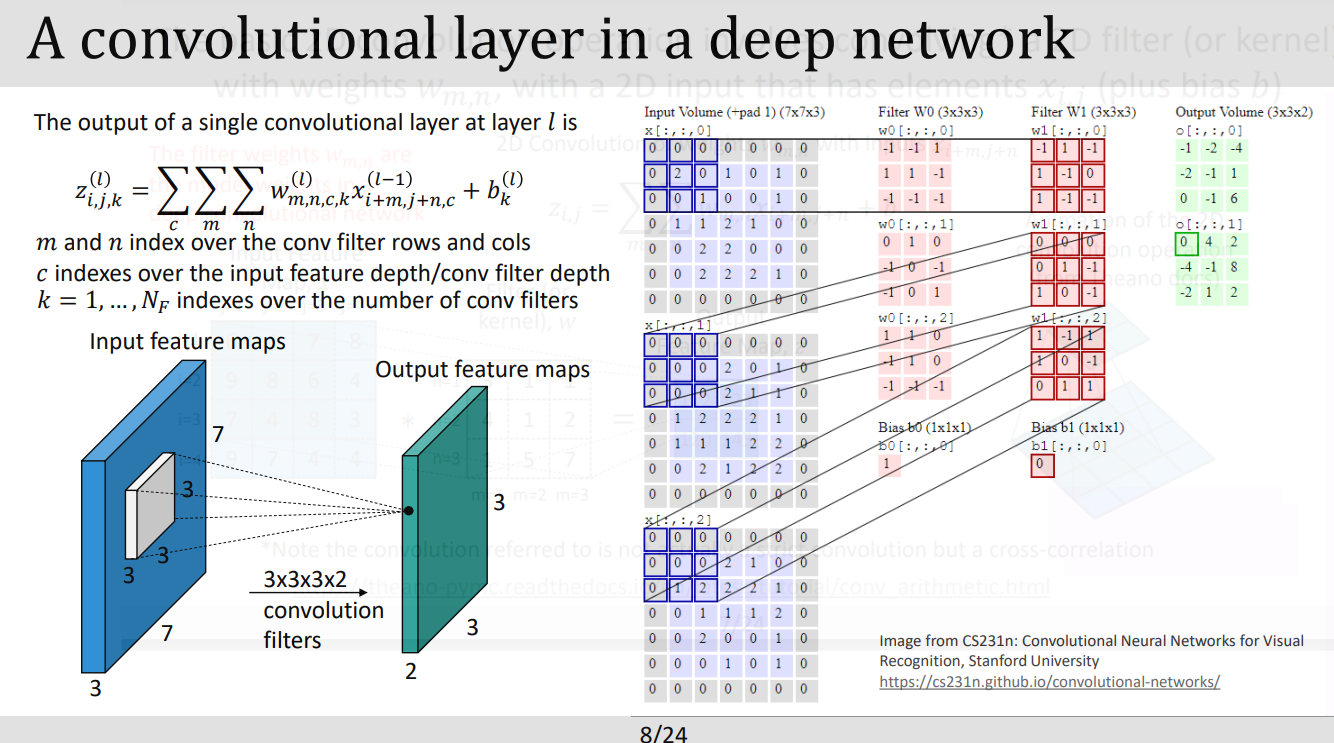

- 하이퍼 파라미터 종류 : filter size , number of filters, stride padding
- the number of filters는 output feature map의 depth . 이게좀 이해가안가네 ??? geometric model 이 머리속에 잘 안잡힌다!

- pooling layer?: 피쳐맵 사이즈를 감소시켜 연산량을 감소시키고 작은 변환에 강건한 아웃풋을 만들어준다.
- max pooling 은 가장큰 값을 반환하고 , average pooling 모든요소의 평균은 반환한다.
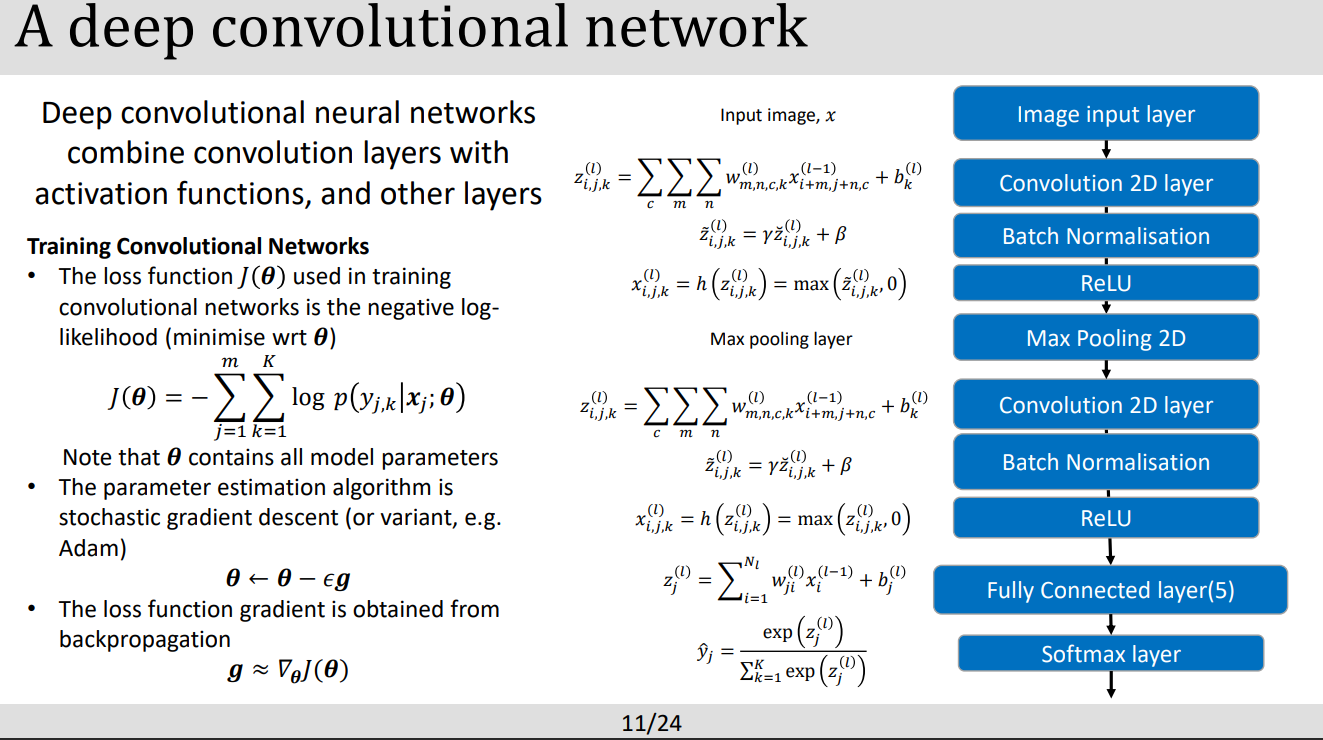
- fully connected layer 전에 사실 flattening(평탄화) 작업이 잇는데 이는 3d 혹은 4d형태인 값들을 1D 형태로 바꾸 Fully connected layer에 전달해준다. FCL은 전 레이어의 뉴론과 각각의 뉴런들이 전부 연결되있는 형태로, 아웃풋과 인풋의 Non- linear relationship을 배우기위해 존재한다. (아래그림과 같이보기)

PART2: ADVANCED CONVOLUTIONAL NETWORK DESIGN
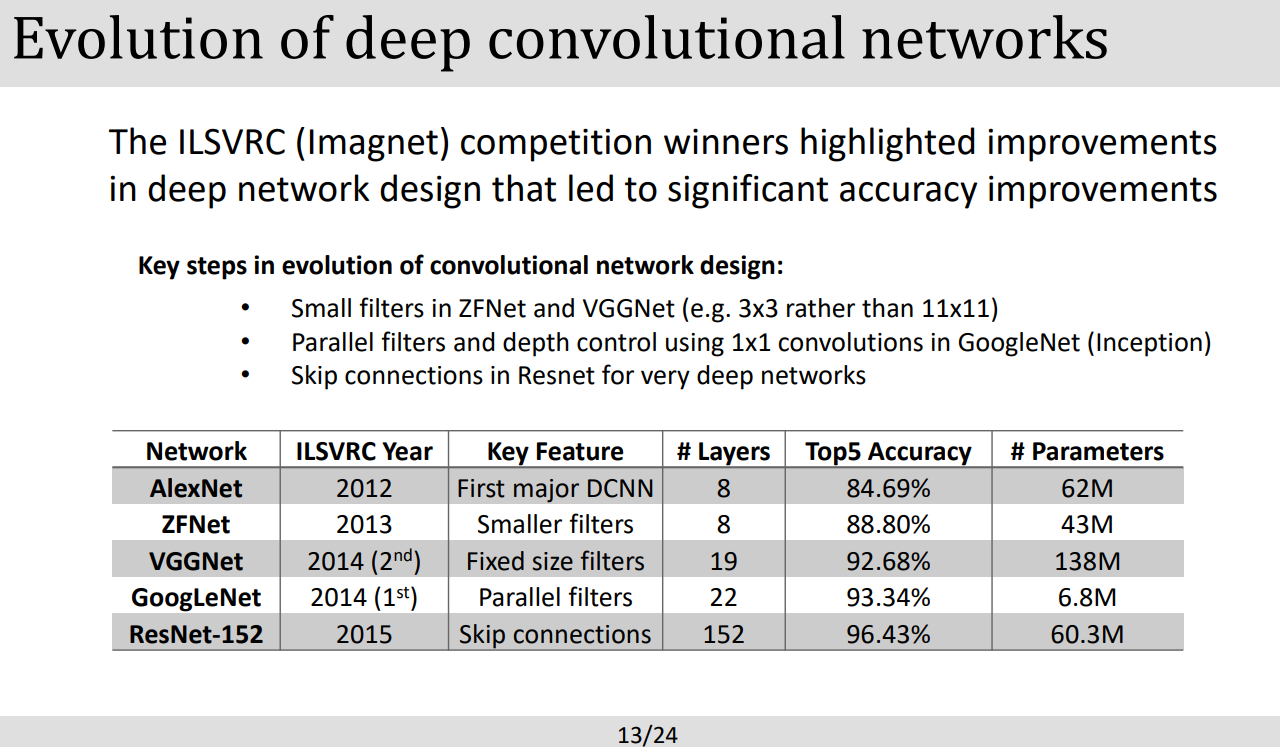
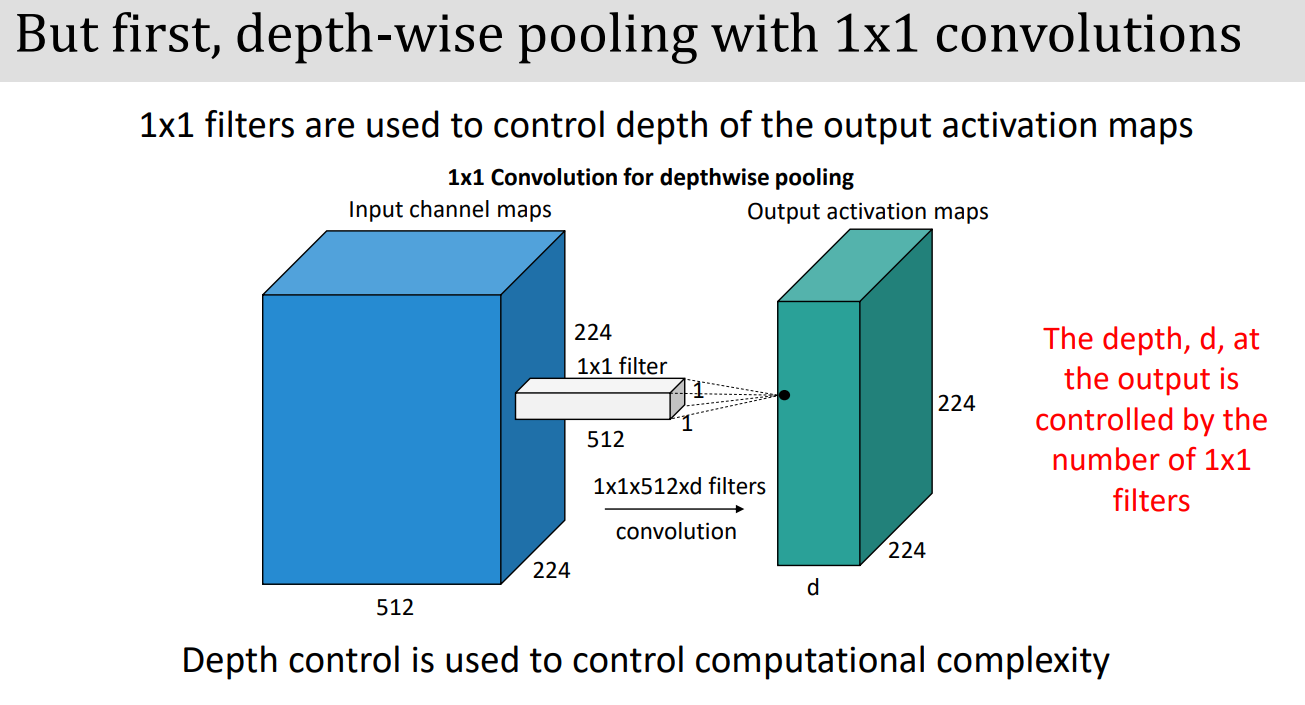
- depth-wise pooling layer 는 computation complexity를 줄여준다( coursework에 출제됬었네)

- 구글넷 전문 설명사이트
- 구글에서 나온 백본으로 2014년도 1등..

- 이에 질세라 마이크로 소프트에서 나온것으로 2015년 1등 Resnets
- 자세한 설명 사이트
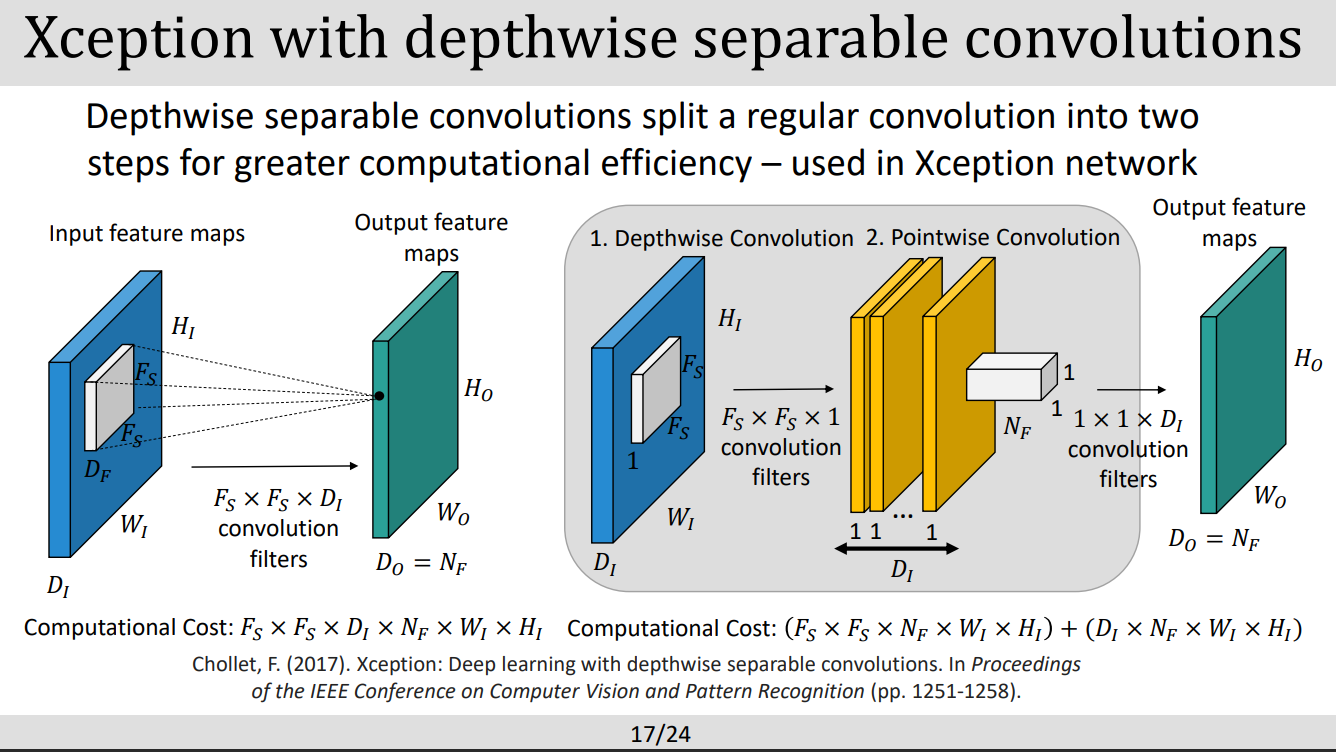
- 또 이에 질세라 구글에서 2018년 발표한 xception
- 설명사이트

- 모바일폰 같은곳에서도 사용할 수 있는 가벼운 버전으로 depthwise separable convolution을 사용
- 설명사이트

- chatgpt로인해 가장핫해진 모델..
- 설명사이트
'[End]Robotics Lectures in UoS > Deep Learning' 카테고리의 다른 글
| [DL] Lecture7: Recurrent Networks (0) | 2023.05.06 |
|---|---|
| [DL] Lecture6:Deep learning for computer vision (0) | 2023.05.06 |
| [DL] lecture4: Optimization and Regularization Techniques (0) | 2023.05.05 |
| [DL] Lecture3: Deep Feedforward Networks-시험공부 (0) | 2023.05.05 |
| [Deep Learning] lecture2 Machine Learning Fundamentals-시험준비 (0) | 2023.05.04 |


댓글